Ad

Microsoft Dynamics 365 fast facts
Overall score: 3.3/5
Pricing: Starts at $65 per user per month.
Key features:
- AI-powered Copilot assistance for sales productivity
- Predictive forecasting and AI-driven lead scoring
- Sales activity tracking and customer engagement insights
- Native Microsoft 365, Teams, Outlook, and Power BI integrations
- LinkedIn Sales Navigator integration (Relationship Sales)
Microsoft Dynamics 365 is one of the most powerful enterprise CRM platforms available, but it is not the right fit for every business. If your company already relies on Microsoft 365, Teams, Outlook, Azure, or Power BI, Dynamics 365 gives you a deeply connected CRM with AI-powered sales, marketing, customer service, and automation tools. If you need a simple CRM that your team can deploy quickly, it is probably more platform than you need.
I recommend Microsoft Dynamics 365 for midsize and enterprise organizations that want to unify sales, marketing, service, and operations within the Microsoft ecosystem. Its modular apps, Copilot AI, and extensive customization make it highly capable, but the platform also comes with a steeper learning curve, higher implementation costs, and pricing that can quickly outpace simpler CRMs.
In this review, I’ll break down Microsoft Dynamics 365’s pricing, features, pros and cons, and best alternatives to help you decide whether it is worth the investment.
Why you can trust TechRepublic
At TechRepublic, we evaluate business software using a consistent editorial methodology designed to help IT leaders and business decision-makers choose the right technology. Every review is based on hands-on product research, vendor documentation, independent user feedback, and an evaluation of real-world business use cases.
For this Microsoft Dynamics 365 review, I assessed the platform’s CRM capabilities, AI features, pricing, customization options, integrations, ease of use, and customer support. I also analyzed verified customer reviews and Microsoft’s official product documentation to evaluate how Dynamics 365 performs in day-to-day sales environments.
Furthermore, I leverage the following work experiences when carrying out software reviews:
- Over 14 years of editorial research and writing
- Over eight years of writing expert reviews about sales and business technologies
- Over two years in insurance sales and team management
- Almost two years in sales territory management
 Bianca Caballero
Sales and Marketing Analyst at TechRepublic
Review methodology: How did I evaluate Microsoft Dynamics 365?
Microsoft Dynamics 365 is designed primarily for midsize and enterprise organizations, so I evaluated it based on the factors that matter most when choosing a CRM. My review considered the platform’s sales capabilities, AI functionality, customization options, Microsoft ecosystem integrations, pricing, usability, customer support, and overall value.
I evaluated Microsoft Dynamics 365 based on the factors that matter most to businesses investing in an enterprise CRM.
- Core CRM features (25%): Contact management, pipelines, forecasting, reporting, automation, and mobile access.
- Advanced features (20%): Copilot AI, predictive scoring, Sales Accelerator, analytics, and customization.
- Pricing (15%): Plan costs, scalability, licensing, free trial, and overall value.
- Ease of use (15%): Setup, navigation, learning curve, and day-to-day usability.
- Integrations (15%): Microsoft 365, Outlook, Teams, Power BI, LinkedIn Sales Navigator, APIs, and third-party apps.
- Customer support (10%): Support channels, documentation, training resources, and community forums.
Pricing
The free trial and onboarding for Dynamics 365 is competitive and allows for a lengthy 30-day platform trial and demo experience. Chat with their sales team to get any unanswered questions resolved.
Here’s the current pricing breakdown for Microsoft Dynamics 365 Sales:
- Dynamics 365 Sales Professional: $65 per user/month (billed annually). Includes core sales force automation, reporting dashboards, the mobile app, and seamless integration with Microsoft 365.
- Dynamics 365 Sales Enterprise: $105 per user/month (billed annually). Includes everything in Sales Professional, plus AI-powered insights, advanced customization, and more robust sales automation.
- Dynamics 365 Sales Premium: $150 per user/month (billed annually). Includes all Sales Enterprise features, plus advanced sales intelligence, Sales Insights, AI-powered recommendations, agentic automation, AI-driven data enrichment, and 1,000 Copilot Credits.
- Microsoft Relationship Sales: Contact Microsoft for a custom quote. This plan combines Dynamics 365 Sales Enterprise with LinkedIn Sales Navigator and requires a minimum purchase of 10 licenses.
Advertisement
More CRM coverage
Key features of Microsoft Dynamics 365
Predictive lead and opportunity scoring
Microsoft Dynamics 365 Sales uses AI-powered predictive scoring to help sellers prioritize the leads and opportunities most likely to convert. These insights feed into work lists, dashboards, and sales recommendations so reps can focus on the highest-value opportunities first.
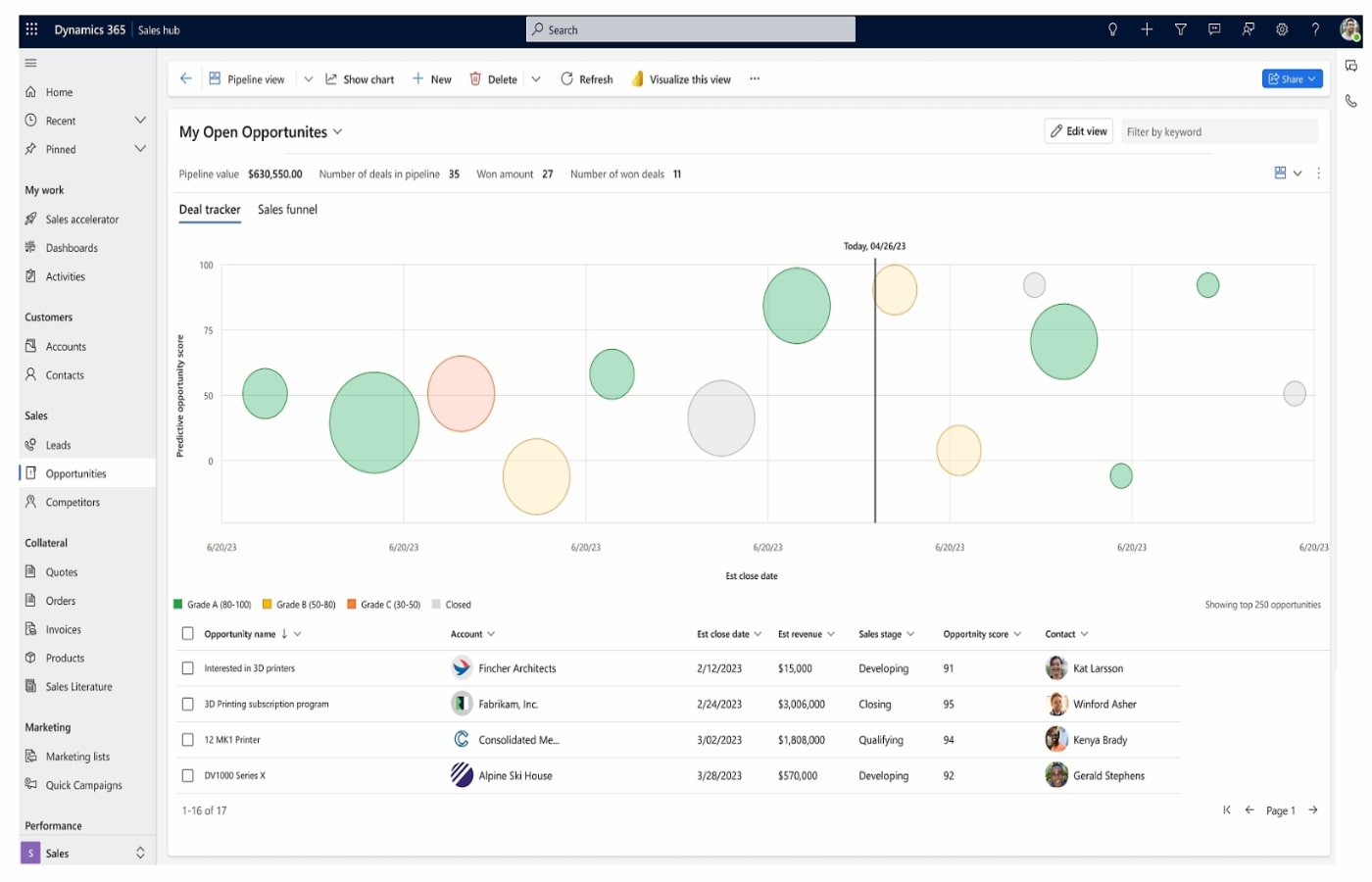 Microsoft Dynamics 365 deal tracking dashboard. Image: Microsoft Dynamics 365
Copilot opportunity summaries
Dynamics 365 Copilot generates summaries that surface key deal information, including recent customer interactions, stakeholder details, next steps, potential risks, and recommended actions. Sellers can also use Copilot to draft emails, prepare for meetings, and update CRM records directly from these insights.
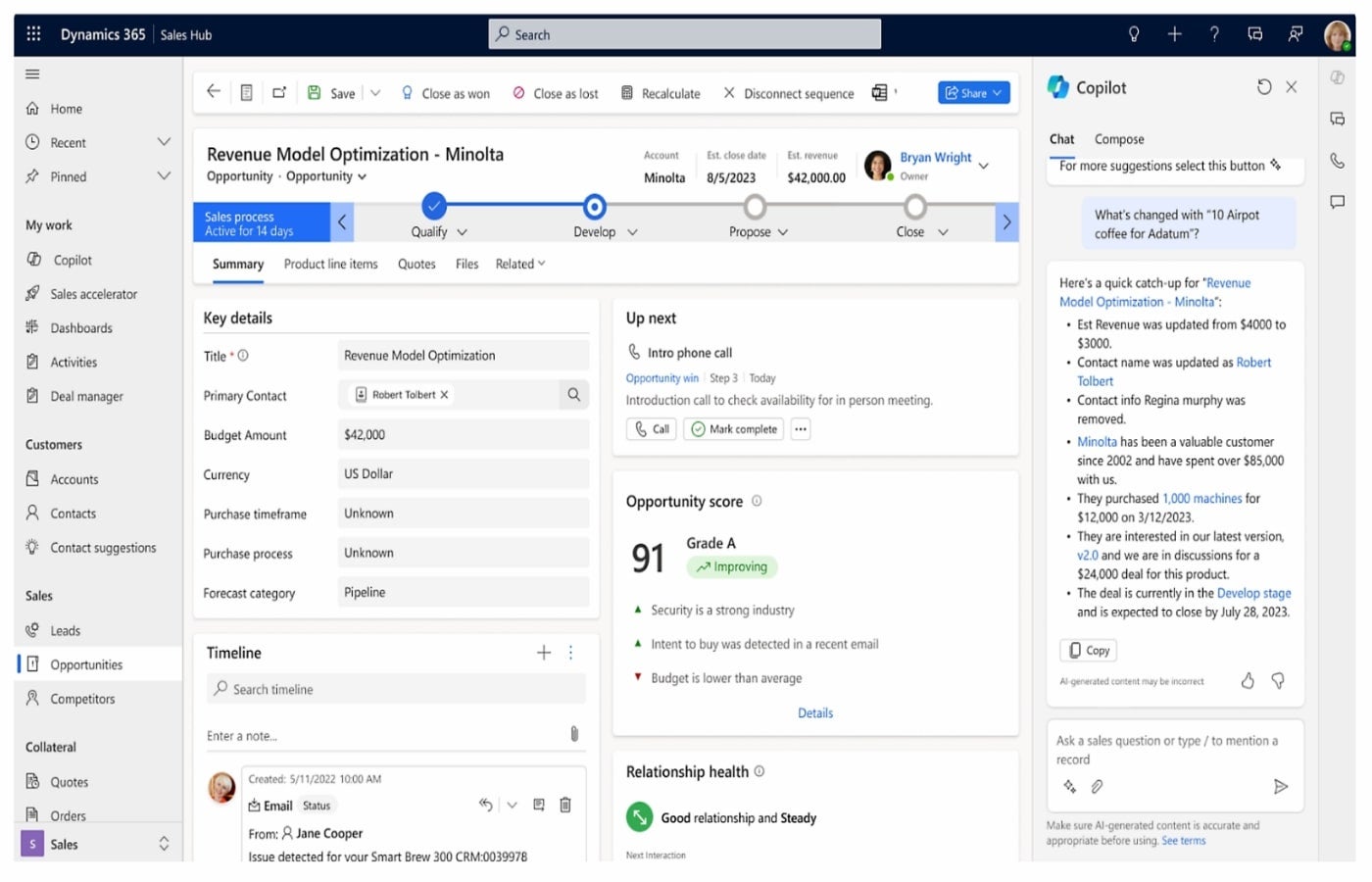 Microsoft Dynamics 365 opportunity tracker and summary details. Image: Microsoft Dynamics 365
Sales sequences
Dynamics 365 Sales includes Sales Accelerator, which lets teams build guided sales sequences for emails, calls, follow-up tasks, and other outreach activities. These sequences help standardize sales processes, automate routine tasks, and ensure reps consistently execute the next best action.
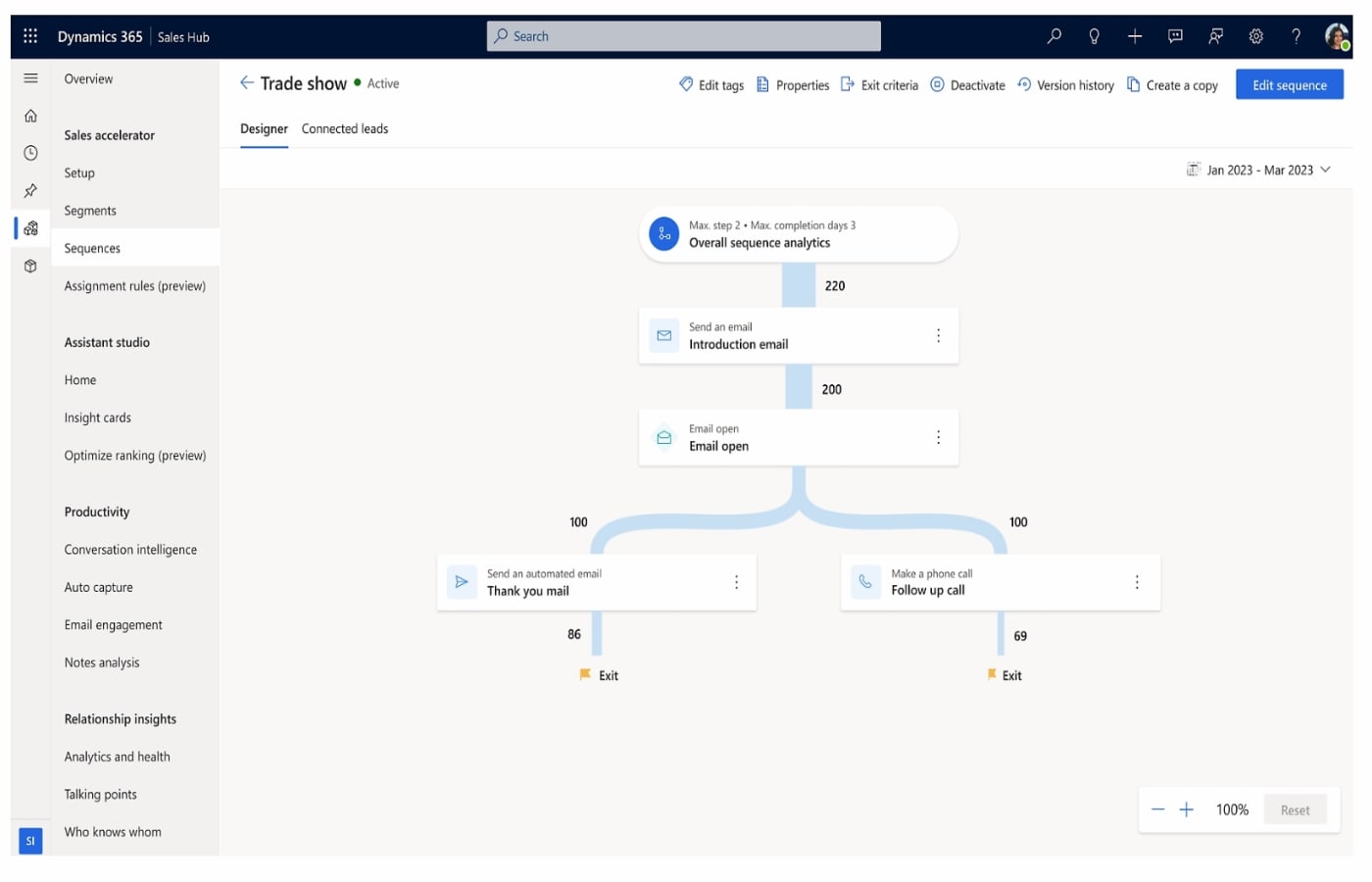 Microsoft Dynamics 365 sales sequences feature page. Image: Microsoft Dynamics 365
Native Microsoft integrations
One of Dynamics 365’s biggest strengths is its native integration with Microsoft 365, Outlook, Teams, Power BI, and Copilot. Sellers can access CRM data, collaborate with teammates, summarize meetings, and update customer records without constantly switching between applications, helping improve productivity and data accuracy.
Advertisement
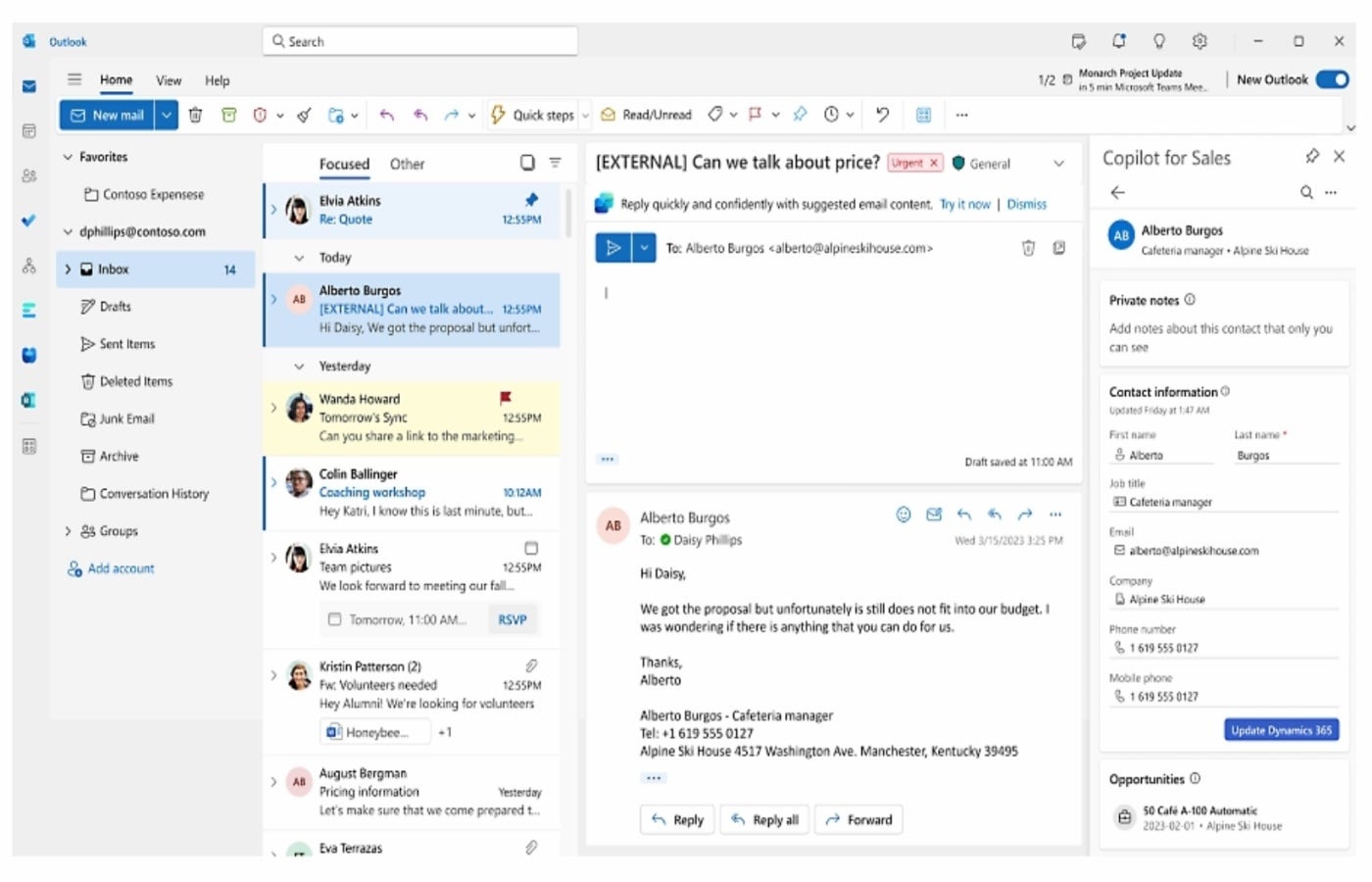 Sales integration with Microsoft Outlook. Image: Microsoft Dynamics 365
Microsoft Dynamics 365 pros and cons
ProsCons
30-day free trial.Steep learning curve, especially for first-time CRM users
Deep native integrations with Microsoft 365, Outlook, Teams, Power BI, and the broader Microsoft ecosystemHigher total cost than many SMB and mid-market CRM competitors
Powerful AI, sales forecasting, automation, and customization capabilities for enterprise sales teamsImplementation and ongoing administration may require dedicated IT or CRM expertise
3 Best Alternatives to Microsoft Dynamics 365
While Dynamics 365 is not an open-source CRM software, it can require some intense configuring of individual applications and features to get a setup specific to a business’s needs. There are other top enterprise CRM software, like HubSpot, Pipedrive, and monday CRM, that offer similar core features at a lower cost.
FeatureDynamics 365HubSpotPipedrivemonday CRM
Best forEnterprise organizationsGrowing businessesSales-focused SMBsTeams managing sales and projects
AI capabilitiesAdvancedAdvancedModerateModerate
CustomizationExtensiveExtensiveModerateExtensive
Pipeline management✓✓✓✓
IntegrationsNative Microsoft + third-party1,800+ apps500+ apps200+ apps
Free option30-day free trialFree CRM plan14-day free trial14-day free trial
HubSpot
Like Dynamics 365, HubSpot is part of a broader customer platform with native hubs and hundreds of third-party integrations, making it easy to expand your CRM as your business grows. The biggest difference is usability. Dynamics 365 is built for organizations that need deep customization and enterprise-scale capabilities, while HubSpot is designed for faster deployment and a gentler learning curve. Its free CRM plan and scalable Sales Hub tiers make it an attractive option for growing businesses, while higher-tier plans add conversation intelligence, AI-powered sales tools, automation, and coaching features.
SEE: Read our complete review of HubSpot for a full breakdown of its offerings.
Advertisement
Pipedrive
Pipedrive is a sales-first CRM built around pipeline management, activity tracking, and workflow automation. Like Dynamics 365, it helps sales teams reduce manual work with automated follow-ups, email synchronization, meeting scheduling, and guided sales activities. However, Pipedrive is much easier to implement and better suited for small and midsize businesses that want a straightforward CRM without enterprise-level complexity. Its visual pipelines, email tracking, and activity reminders make it especially effective for sales teams focused on closing deals.
SEE: If you want to learn more, head over to our complete review of Pipedrive.
monday CRM
monday CRM is a flexible CRM built on monday.com’s work management platform, making it a good fit for teams that manage sales, projects, and customer onboarding in one place. Its visual interface, customizable workflows, and no-code automations make it easier to implement than Dynamics 365, particularly for small businesses. While monday CRM offers AI-powered features and extensive customization, Dynamics 365 remains the stronger choice for enterprises that need advanced sales intelligence, deeper Microsoft ecosystem integrations, and highly configurable business processes.
SEE: Check out our complete individual review of Zoho CRM.
Advertisement
How can Microsoft Dynamics 365 improve sales and marketing efficiency?
Dynamics 365 helps sales, marketing, and all customer-facing initiatives by empowering teams with AI-backed automations and transparency between departments. With the help of features like task management, AI-powered lead qualification, and pipeline tracking, Dynamics 365 users can score and segment incoming leads while also monitoring ongoing deals from an intuitive and flexible dashboard. Businesses who use Dynamics 365 can improve their customer experience from beginning to end, and sales reps can be prepared to scale the most effective selling strategies.
Review methodology
I used a custom rubric to score and review Microsoft Dynamics 365 and its core CRM software offerings. This rubric consists of defined criteria related to the most important factors when choosing a CRM software. I relied on Dynamics 365’s own online resources in addition to real user feedback, scores, and reviews.
The following is the breakdown of the criteria used to score Microsoft Dynamics 365:
- Cost: Weighted 25% of the total score.
- Core features: Weighted 25% of the total score.
- Customizations: Weighted 15% of the total score.
- Integrations: Weighted 15% of the total score.
- Ease of use: Weighted 10% of the total score.
- Customer support: Weighted 10% of the total score.
Ad
